About
A plant pathologist with a problem he can't put down.
Maxwell O. Chibuogwu, PhD. Postdoctoral fellow at the USDA Agricultural Research Service, alumnus of UW–Madison, the University of Arizona, and the University of Benin — and increasingly, a builder of the tools African agriculture has been waiting for.

The science came first.
I'm a plant pathologist by training. My doctoral work at the University of Wisconsin–Madison focused on the integrated management of Gibberella diseases and the toxin deoxynivalenol (DON) — a mycotoxin produced by Fusarium graminearum that accumulates in silage corn and threatens dairy supply chains across North America. I defended my dissertation in August 2024 with a 3.94 GPA and a stack of publications I'm still proud of.
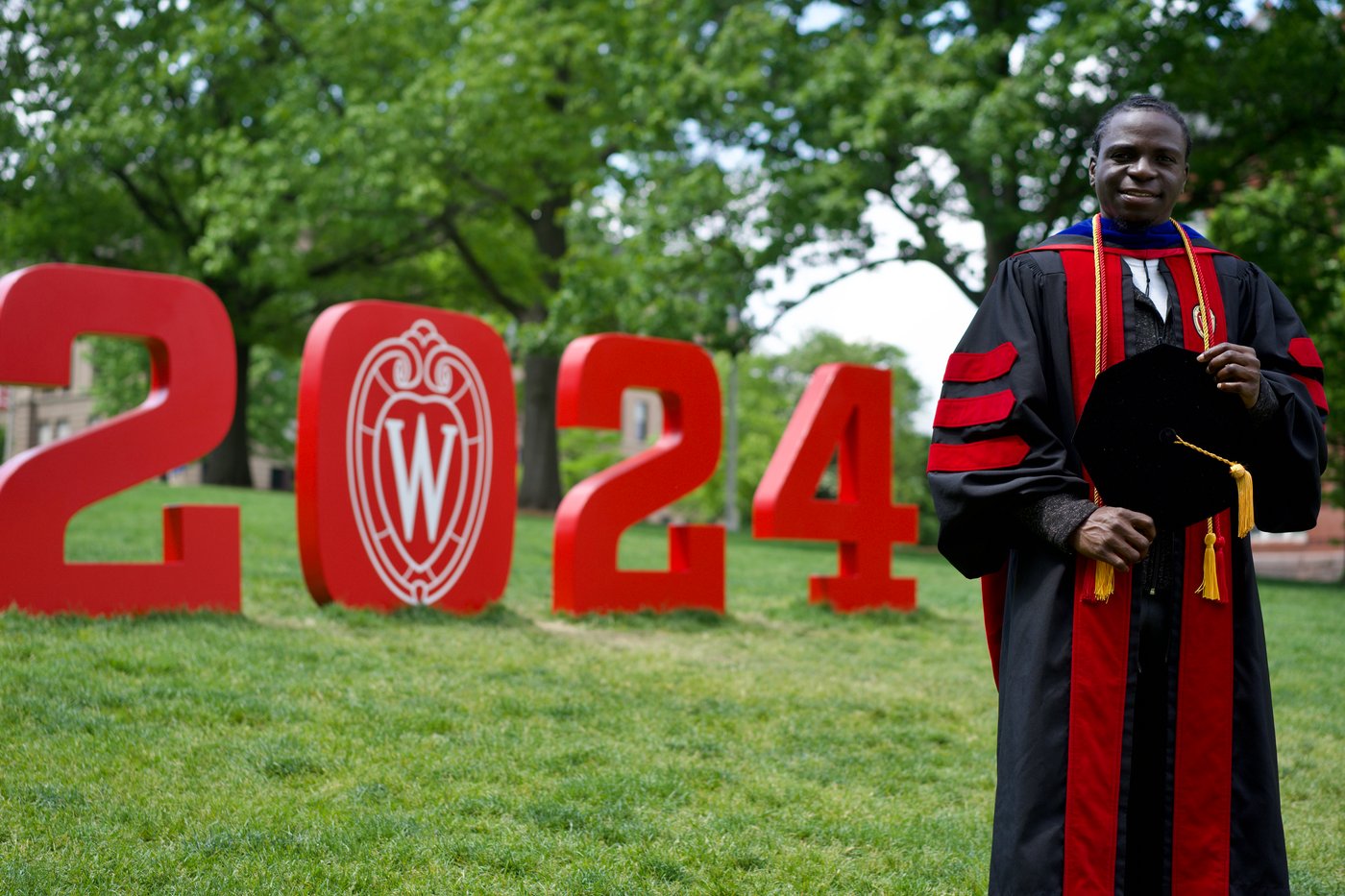
Today I'm an ORISE postdoctoral fellow at the USDA Dairy Forage Research Center, where I lead research on disease and toxin management in dairy forages. The work spans field trials, whole-genome sequencing of Fusarium species using Oxford Nanopore platforms, fungicide resistance evolution under climate change, and predictive modeling for mycotoxin detection in silage fields. I am also collaborating with industry partners to evaluate postbiotic additives on silage fermentation.
Before all of that, I trained in molecular plant virology at the University of Arizona, working with the Brown Lab on the palo verde witches' broom virus — an emaravirus transmitted by eriophyid mites across the Sonoran Desert. And before that, my undergraduate work at the University of Benin — graduated summa cum laude in Plant Biology and Biotechnology — gave me my first taste of tissue culture, DNA extraction, and the long, patient art of experimental design.
The pivot — or maybe just the next layer.
Science taught me what I now believe is the most underrated skill in African development: the ability to rigorously distinguish between what is true, what is plausible, and what is wishful. Six years of field plots and gel electrophoresis builds a particular kind of intellectual stamina — one that doesn't tolerate hand-waving when the stakes are real.
And the stakes are real. While I was learning to model fungal pathogens, the Nigerian Meteorological Agency was — and still is — publishing weather bulletins as static PDFs of low-resolution icons, pushed out to a country whose smallholder farmers carry nearly all the climate risk and almost none of the climate data. That gap, and a hundred others like it, is what I've decided I cannot ignore.
So I'm building. Vibe-coding, agentic AI, weather APIs, satellite imagery, civic dashboards — the whole modern developer stack pointed at the boring, unglamorous, deeply consequential infrastructure questions African governments have failed to solve. The first product is a weather application for Nigerian agricultural cities, comparable in quality to what a Wisconsin farmer takes for granted. The long-term ambition includes owned satellite data. I'm under no illusions about how hard any of this is. I've also spent enough time in research to know that hard isn't the same as impossible.
This site is where I'll write all of it down — the science, the building, and the thinking in between.
At a glance.
- Now
- ORISE Postdoctoral Fellow, USDA Agricultural Research Service — Dairy Forage Research Center, Madison, WI.
- Doctorate
-
 University of Wisconsin–Madison
PhD, Plant Pathology · 2020–2024
Dissertation on integrated management of Gibberella diseases and DON in silage corn. Major advisor: Damon L. Smith. - Earlier training
-
 University of Arizona
Graduate studies in molecular plant pathology & plant virology · Jan 2020–Jul 2020
Brown Lab — palo verde witches' broom emaravirus and eriophyid mite vectors. International Institute of Tropical Agriculture (IITA)
Research Internship in Genetic Resources Center, Gene Bank & plant virology · 2018-2019
Germplasm and Seed storage, DNA Extraction, Tissue Culture, ELISA, Plant Health Certification. University of Benin
BSc (First Class) or summa cum laude, Plant Biology & Biotechnology · 2013–2017 - Fields
- Field crop pathology · mycotoxin management · molecular virology · whole-genome sequencing · bioinformatics · predictive modeling · AI-assisted software development.
- Building
- Civic and agricultural tech for African markets, beginning with weather products for Nigerian farmers. Rethinking Nigeria.
- Recognized for
-
1st place, MANRRS Region V Business Pitch Contest 2023 — a $12,000 scholarship to the Draper University Summer Entrepreneurship Bootcamp in Silicon Valley, where Team Lightning went on to win the programme-wide competition out of ~10 teams. Also: American Farm Bureau Federation Fellowship (2023) · I.E. Melhus Graduate Symposium Award (2023) · Best Lightning Talk, 12th Plant Sciences Symposium (2022) · Multiple departmental fellowships and travel grants.
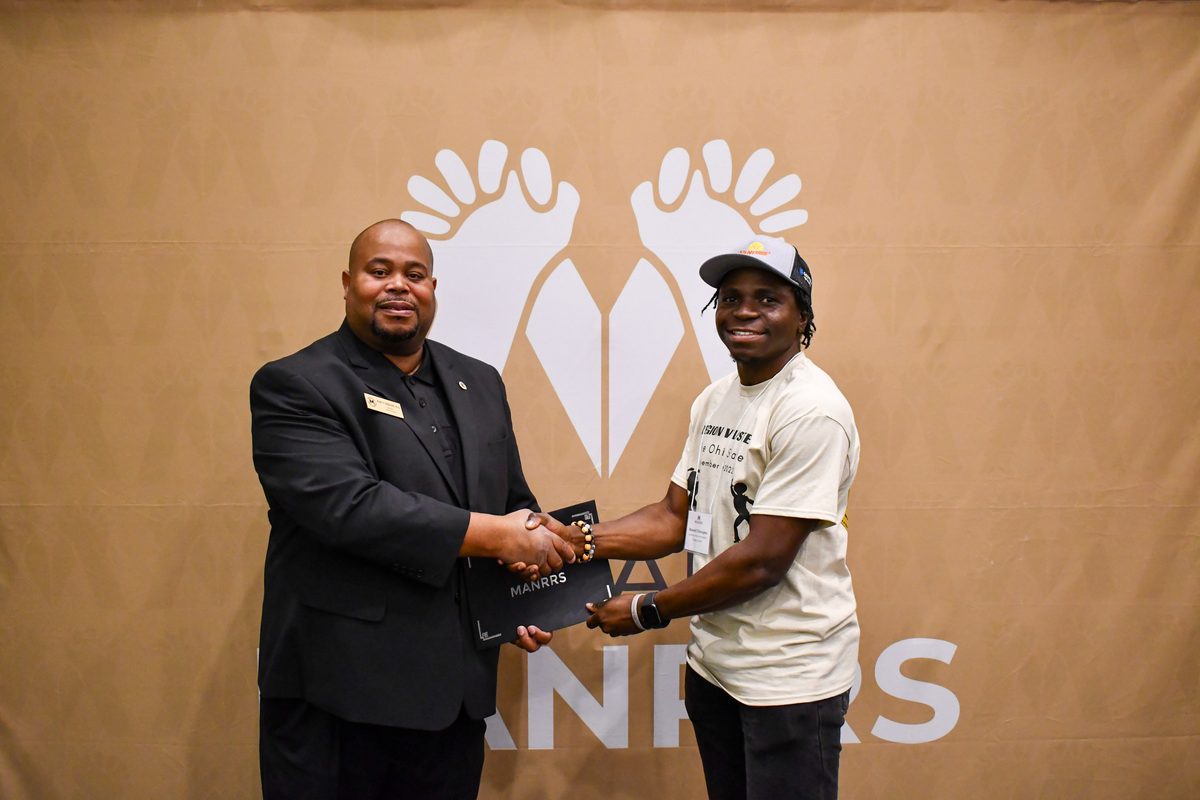
MANRRS Region V Pitch Contest — 1st place, 2023 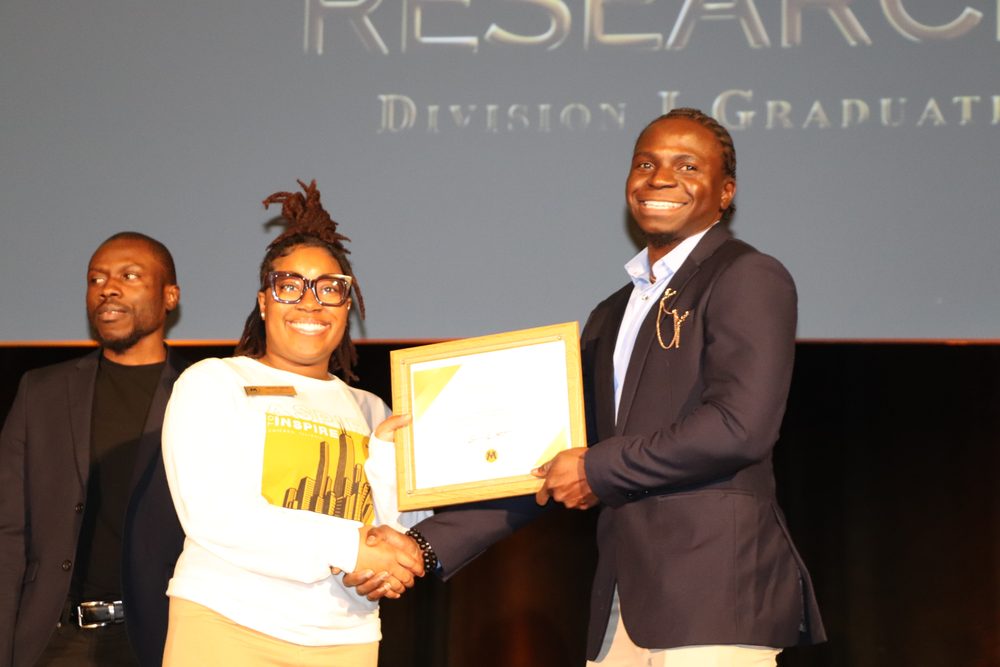
MANRRS national conference award 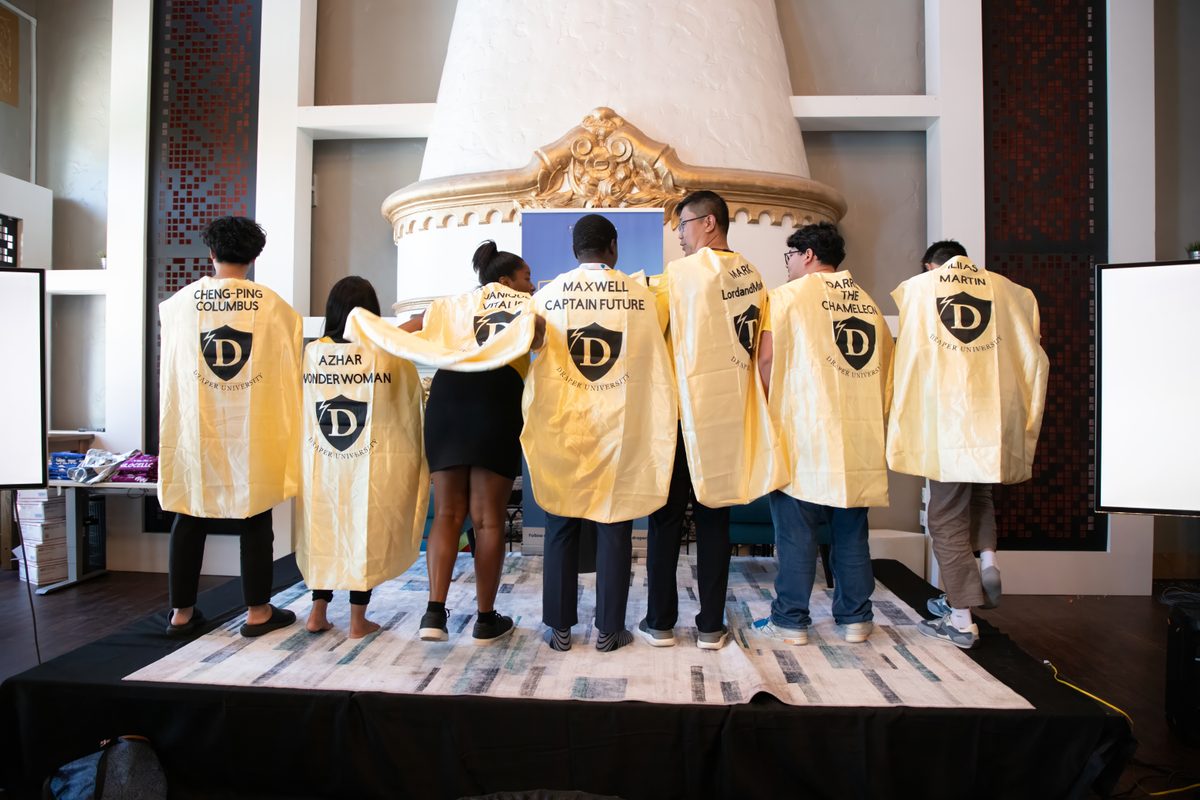
Draper University, Silicon Valley — Team Lightning. Cape: Captain Future. 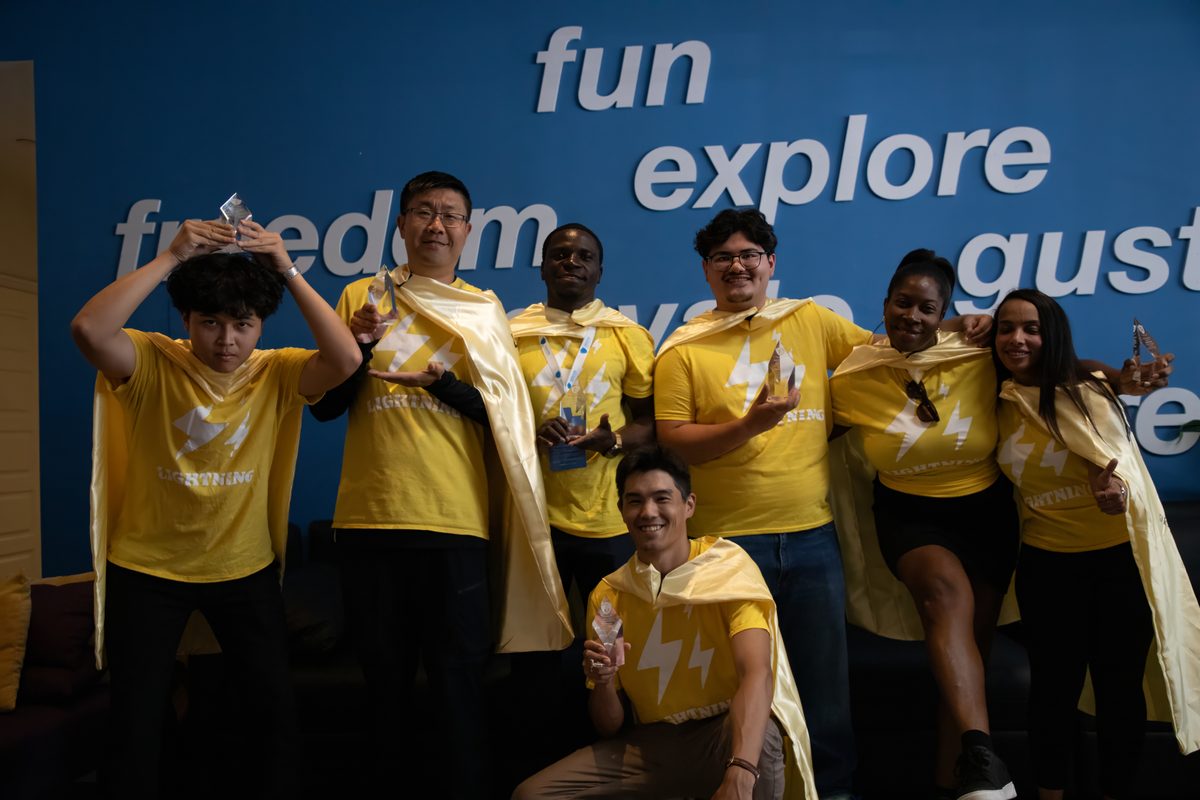
Team Lightning — 1st place, Draper University Bootcamp 2023 - Affiliations
- American Phytopathological Society (APS) · Mycological Society of America (MSA) · American Society for Microbiology (ASM) · Minorities in Agriculture, Natural Resources and Related Sciences (MANRRS).
- Based in
- Madison, Wisconsin.
In the press.
- UW–Madison CALS News Spring 2024 grad: Maxwell Chibuogwu studies crop pathogens, earns PhD to support agriculture in African nations
- CALS Grow Magazine Emissaries of Science — cover feature on the WEMP program
- Hoard's Dairyman Silage mycotoxins can intensify in silos
- UW–Madison International Division PhD student supporting international students through involvement
- Wisconsin Agribusiness Classic Speaker, 2023 Agribusiness Classic
- American Farm Bureau Federation AFBF Fellowships bring MANRRS student members to leadership conference
- eCALS UW MANRRS students thrive at national conference
Get in touch.
The fastest channel is LinkedIn. I'm especially keen to hear from researchers, developers, and funders working at the intersection of agriculture, AI, and African development.